
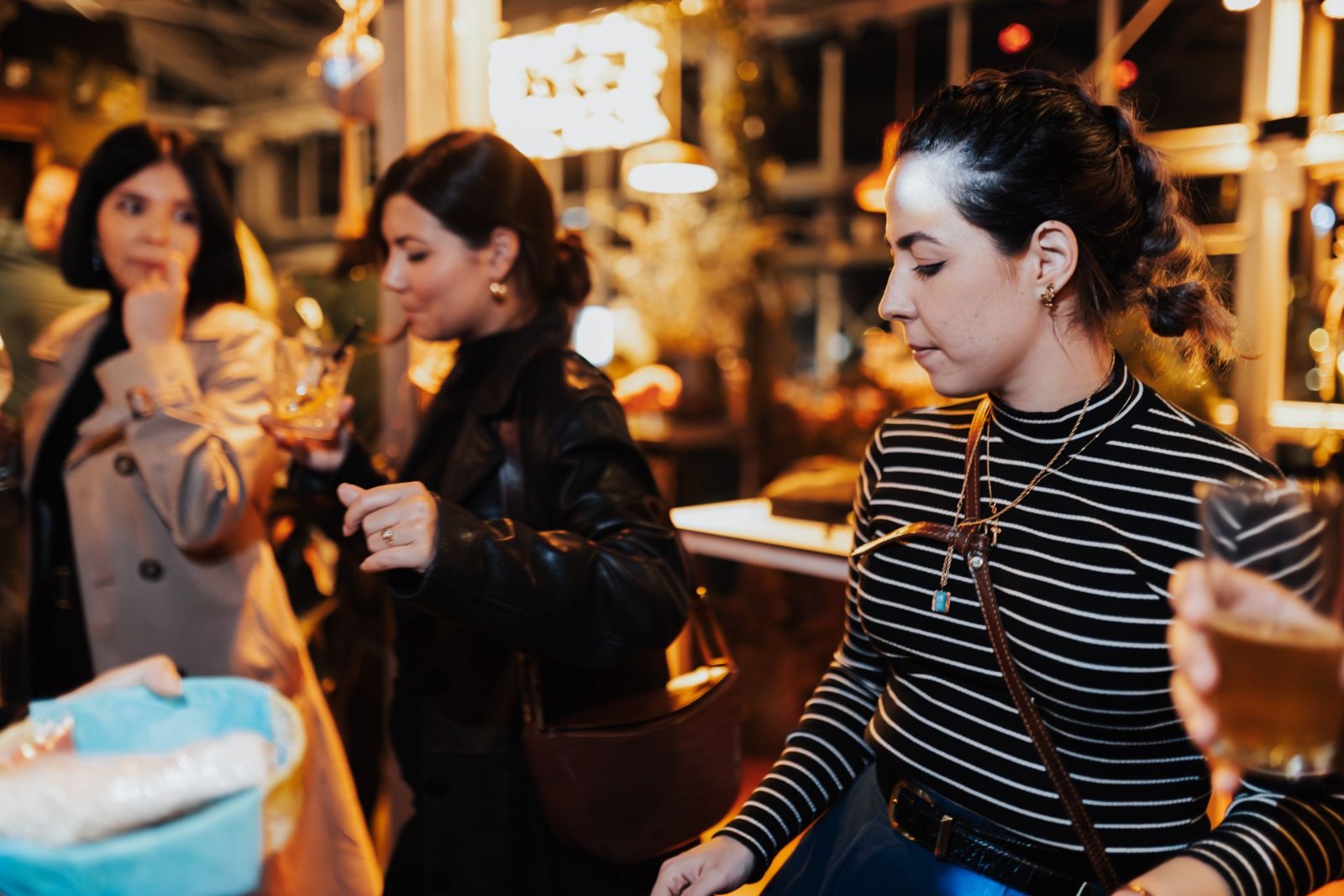
New York City is one of the greatest bar-hopping destinations in the world. From the dive bars of the East Village to the craft cocktail lounges of the West Village, the rooftop bars of Midtown to the speakeasies hidden beneath Brooklyn brownstones — the city offers an almost infinite variety of drinking experiences. But when you’re organizing a group night out across multiple venues, one question inevitably comes up: how do you keep the energy going from stop to stop?
Two competition formats have emerged as frontrunners in the bar crawl entertainment space: the bar crawl photo challenge and the traditional drinking game. Both have their loyal advocates, both have their obvious appeal, and both can absolutely make or break a group night out. But which one actually holds up better across five, six, or even ten stops through the city?
In this article, we’re going to break down both formats in detail — looking at engagement, inclusivity, scalability, and sheer fun factor — to help you decide which approach is right for your next NYC bar crawl. We’ll also take a look at how organized crawl experiences like those offered by Barcrawlerz incorporate both formats to maximize group entertainment throughout the night.
Understanding the Two Competition Formats
What Is a Bar Crawl Photo Challenge?
A bar crawl photo challenge is exactly what it sounds like: participants are given a list of photo prompts or tasks that they must complete and photograph throughout the course of the evening. These challenges can range from the simple (“take a photo with a bartender”) to the creatively demanding (“recreate a famous painting using only items found at the bar”) to the hilariously social (“get a stranger to join your group photo at every stop”).
The photos are typically submitted to a group chat, shared on social media with a specific hashtag, or reviewed at the end of the night by a designated judge. Points are awarded for completion, creativity, and sometimes audience votes. The team or individual with the most points at the end of the crawl wins a prize — which could be anything from bragging rights to a free round of drinks.
Photo challenges have become increasingly popular in NYC’s bar crawl scene because they work naturally with smartphone culture. Nearly everyone has a camera in their pocket, and the format encourages organic social media sharing that extends the fun well beyond the night itself.
What Are Traditional Drinking Games in a Bar Crawl Context?
Traditional drinking games — think beer pong, flip cup, kings, never have I ever, and their many variations — have been a staple of group drinking culture for decades. In a bar crawl context, these games are typically adapted for bar settings, meaning they often don’t require specialized equipment and can be played at a table or standing around a high-top.
Popular bar-friendly versions include card-based games, trivia challenges, verbal games like “categories” or “most likely to,” and dice games. Some bars in neighborhoods like the Lower East Side or Murray Hill even have permanent setups for beer pong or shuffleboard that groups can use during their stop.
The appeal of traditional drinking games is their familiarity. Most people have played at least a few of these games before, so there’s no learning curve, and the social bonding that comes from shared competition is immediate and powerful.
The Case for Bar Crawl Photo Challenges
Engagement That Travels Well Between Stops
One of the biggest challenges of any multi-stop bar crawl is maintaining momentum. After the third or fourth venue, energy can start to flag, people get separated, and the group dynamic begins to fracture. Photo challenges are uniquely well-suited to combat this problem because the competition is ongoing and cumulative.
Unlike a game of beer pong that begins and ends at a single bar, a photo challenge creates a continuous narrative thread that runs through the entire evening. At each new stop, participants are looking for new opportunities to complete their challenge list. The game doesn’t reset — it evolves. This gives the night a sense of progression and purpose that keeps people engaged even at stop number seven.
“The best bar crawls feel like an adventure, not just a series of drinking stops. A well-designed photo challenge turns the whole city into your game board.”
Inclusivity and Accessibility for All Group Members
Not everyone in your group is going to be a competitive drinker, and that’s a good thing. Photo challenges are inherently more inclusive because they don’t require anyone to drink at a specific pace or participate in alcohol-centric competition. The designated driver, the person who’s taking it easy, the friend who just doesn’t enjoy competitive drinking — all of them can participate fully in a photo challenge.
In a city as diverse as New York, where your bar crawl group might include people of different ages, backgrounds, and drinking preferences, this inclusivity is a genuine advantage. Everyone with a smartphone is on equal footing, and the challenges can be designed to reward creativity and social boldness rather than alcohol tolerance.
Built-In Social Media Content Creation
Let’s be honest: in 2024, the social media dimension of a night out matters. Photo challenges generate content naturally and enthusiastically. When your group is actively trying to create interesting, funny, or creative photos throughout the night, you’re also building a shared digital memory of the experience.
Groups that participate in photo challenges during NYC bar crawls often report that they enjoy the photos and videos from the night more than those from traditional bar outings. The content is intentional, creative, and tells a story — which makes it far more shareable and memorable than a blurry selfie at a crowded bar.
Services like Barcrawlerz have recognized this dynamic and often incorporate branded hashtags and social sharing components into their organized photo challenge formats, helping groups create content that’s both fun to make and fun to relive afterward.
Scalability for Large Groups
Photo challenges scale beautifully. Whether you have a group of eight or a group of forty, the format works. Larger groups can be divided into teams, with each team competing independently across the same challenge list. This actually becomes more entertaining with more people, as different teams approach the same prompts in wildly different ways.
For large corporate events, bachelorette parties, birthday celebrations, or organized bar crawls in high-traffic NYC neighborhoods like Hell’s Kitchen or the Meatpacking District, photo challenges offer a level of scalability that traditional drinking games simply cannot match.
The Case for Traditional Drinking Games
Immediate Social Bonding and Group Chemistry
There’s something almost primal about the social bonding that happens around a competitive drinking game. The shared stakes, the immediate wins and losses, the trash talk and the laughter — traditional drinking games create intense, immediate social chemistry that photo challenges sometimes take longer to generate.
For groups where people don’t know each other well — think work events, friend-of-a-friend gatherings, or mixed social groups — a round of “never have I ever” or a card game like Kings can break the ice faster than almost any other social activity. The rules are simple, the participation is universal, and the revelations are often hilarious.
In NYC’s bar scene, where you might be squeezing into a small East Village bar with limited space, a verbal drinking game requires nothing more than the people themselves — no equipment, no setup, no app required.
Familiar Format Reduces Friction
One of the practical advantages of traditional drinking games is that most people already know how to play them. There’s no onboarding process, no challenge list to read through, no points system to explain. You sit down, someone says “want to play never have I ever?” and the game begins.
This low-friction entry point is valuable, especially as the night progresses and attention spans naturally shorten. When you’re at stop four and the group is feeling the effects of the evening, a simple, familiar game is much easier to execute than a photo challenge that requires creative thinking and smartphone coordination.
Concentrated Intensity at Each Stop
While photo challenges excel at maintaining engagement across the full arc of a bar crawl, traditional drinking games excel at creating intense, memorable moments at individual stops. A nail-biting game of flip cup at a Murray Hill bar or a heated round of trivia at a Williamsburg pub can become the defining memory of an entire evening.
These concentrated bursts of competitive intensity have their own value. They create clear “highlight reel” moments that groups talk about for weeks afterward. “Remember when Jake lost that game of beer pong and had to buy the whole round?” is exactly the kind of story that traditional drinking games generate with remarkable reliability.
No Technology Required
Photo challenges depend on smartphones, battery life, signal, and varying levels of technological comfort. Traditional drinking games require none of that. For groups that want to disconnect from their screens for the evening, or for stops at venues where signal is poor or the atmosphere calls for putting phones away, traditional games offer a genuinely screen-free social experience.
There’s also something to be said for the tactile, face-to-face quality of traditional games. In a city where everyone is constantly staring at a screen, a game that requires you to look at the people around you — to read their expressions, react to their answers, and engage directly — can feel refreshingly human.
Head-to-Head Comparison: Which Format Wins Across Multiple Stops?
Sustained Engagement Over a Full Evening
When it comes to maintaining group engagement across five or more stops — which is the norm for a proper NYC bar crawl — photo challenges have a clear structural advantage. The cumulative, ongoing nature of the competition means that every stop adds to a larger story. There’s always something to look for, always a challenge to attempt, always a reason to stay engaged as a group.
Traditional drinking games, by contrast, tend to be episodic. Each game begins and ends at a single location, and there’s no natural carry-over to the next stop. This means that the entertainment burden resets at each venue, which can lead to inconsistent energy levels throughout the night.
Adaptability to Different Venue Types
New York City bar crawls typically take groups through a variety of venue types — loud dive bars, intimate cocktail lounges, crowded rooftop bars, quiet neighborhood pubs. The ability to adapt to these different environments is crucial for any competition format.
Photo challenges adapt naturally to different environments because the venue itself becomes part of the challenge. A rooftop bar offers different photo opportunities than a speakeasy, and both offer different opportunities than a sports bar. The format embraces variety rather than fighting against it.
Traditional drinking games can struggle in certain environments. A crowded, noisy bar makes verbal games difficult to follow. A small, intimate lounge may not have the space or the atmosphere for competitive games. Some upscale venues actively discourage visible drinking game activity. Photo challenges face fewer of these environmental restrictions.
Group Size Flexibility
As noted earlier, photo challenges scale more effectively than most traditional drinking games. Beer pong works best with four people. Flip cup works with eight to twelve. As group sizes grow beyond these ranges, traditional games become unwieldy or require parallel games that splinter the group.
Photo challenges can accommodate groups of virtually any size by dividing into teams, and the format actually becomes more entertaining with more participants because it generates more varied and creative responses to the same prompts.
Memorability and Lasting Value
Both formats create memories, but they create different kinds of memories. Traditional drinking games create vivid, story-worthy moments — the kind of memories that are retold verbally at future gatherings. Photo challenges create documented memories — actual photographs and videos that can be revisited, shared, and relived in high definition.
For groups that want a tangible keepsake from their night out, photo challenges offer something that traditional games simply cannot: a curated visual record of the entire evening. This is particularly valuable for milestone events like bachelorette parties, birthday crawls, or team-building events in NYC.
The Hybrid Approach: Why the Best Bar Crawls Use Both
Combining Formats for Maximum Entertainment
The most sophisticated bar crawl organizers in New York City — including the team at Barcrawlerz — have recognized that the photo challenge vs. traditional drinking game debate is something of a false choice. The most entertaining and memorable bar crawls typically incorporate elements of both formats, using each where it’s most effective.
A well-designed hybrid approach might look something like this: an ongoing photo challenge runs throughout the entire evening, creating continuity and sustained engagement. At certain stops, a quick traditional drinking game is introduced as a bonus challenge or a tiebreaker, creating those concentrated moments of competitive intensity that traditional games do so well. The photo challenge keeps the group together between stops; the drinking games create the highlight moments within stops.
“The secret to a great bar crawl isn’t choosing between photo challenges and drinking games — it’s knowing when to use each one to maximum effect.”
How Barcrawlerz Structures Competitive Entertainment
Barcrawlerz has become one of the go-to options for organized bar crawls in New York City precisely because their events are thoughtfully structured to maintain group energy across multiple stops. Their approach to competitive entertainment reflects a deep understanding of group dynamics and what actually works in a real-world bar crawl setting.
By incorporating photo challenges as the backbone of the evening’s competition — complete with point systems, creative prompts tailored to each neighborhood, and social sharing components — while also introducing brief, high-energy traditional game elements at key stops, Barcrawlerz creates experiences that feel both organized and spontaneous. Participants get the sustained engagement of the photo challenge format and the immediate social bonding of traditional games, all within a guided tour of some of NYC’s best bar scenes.
Whether you’re exploring the craft beer bars of Astoria, the cocktail lounges of the Upper West Side, or the legendary bar strips of the Lower East Side, having a structured competition format transforms the experience from a simple night of drinking into a genuine group adventure.
Practical Tips for Implementing Each Format on Your Next NYC Bar Crawl
Setting Up a Photo Challenge That Actually Works
If you’re planning to run a photo challenge on your next bar crawl, a little advance preparation goes a long way. Create your challenge list before the night begins, and make sure it includes a mix of easy, medium, and difficult tasks. Easy tasks (like “take a photo with a bartender”) ensure everyone gets points and stays engaged. Medium tasks (like “recreate a famous movie scene using bar props”) reward creativity. Difficult tasks (like “get a stranger to join your group in a choreographed dance”) create the most memorable moments and the highest point values.
Designate a group chat or shared album for photo submissions, and assign someone the role of scorekeeper. At each stop, do a quick point tally to keep the competition feeling alive. Consider offering a prize at the final stop — even something small like the winner choosing the next round — to keep motivation high throughout the evening.
Adapting Traditional Drinking Games for Bar Settings
If you want to incorporate traditional drinking games into your bar crawl, choose games that don’t require specialized equipment and can be played in a variety of environments. Card games are your best friend — a simple deck of cards enables dozens of different games and fits in any pocket. Verbal games like “categories,” “most likely to,” and “two truths and a lie” require nothing at all and can be played anywhere.
Be mindful of the venue and the atmosphere. A loud, crowded bar is not the place for a game that requires careful listening. A quiet neighborhood pub might be perfect for a card game at a corner table. Always check with bar staff before setting up any game that requires table space or equipment, and be respectful of other patrons.
Choosing the Right Format for Your Group
Ultimately, the best competition format for your bar crawl depends on the specific makeup and preferences of your group. Ask yourself a few key questions before the night begins:
Is your group comfortable with smartphones and social media? If yes, a photo challenge is likely to land well. Is your group made up of people who already know each other well, or are there strangers in the mix? If there are strangers, traditional drinking games’ ice-breaking power may be more valuable in the early stops. How large is your group? For groups over fifteen, photo challenges are almost certainly the more practical choice. What’s the overall vibe you’re going for — a casual, spontaneous night or a more structured, competitive event?
For groups that want a fully organized experience without having to answer any of these questions themselves, booking through a service like Barcrawlerz takes the planning burden entirely off your shoulders and delivers a professionally designed experience that’s been optimized for maximum group entertainment.
The Verdict: Which Format Keeps Groups Entertained Across More Stops?
After examining both formats in depth, the honest answer is that bar crawl photo challenges have a structural advantage when it comes to maintaining group entertainment across multiple stops. Their cumulative nature, adaptability to different venues, scalability for large groups, and ability to generate lasting memories give them an edge in the specific context of a multi-stop bar crawl.
Traditional drinking games, however, remain irreplaceable for their immediate social bonding power, their screen-free accessibility, and their ability to create concentrated, intense moments of competitive fun at individual stops.
The smartest approach — and the one that the best NYC bar crawl organizers consistently use — is to treat these formats as complementary rather than competing. Use photo challenges to maintain the thread of competition and engagement across the full arc of the evening. Use traditional drinking games strategically at specific stops to create energy spikes and memorable moments. The result is a bar crawl experience that’s greater than the sum of its parts.
New York City’s bar scene is rich enough to support almost any format you choose. The neighborhoods are diverse, the venues are varied, and the energy of the city itself provides a backdrop that makes almost any well-organized group activity more exciting. Whether you’re planning a bachelorette party in the Meatpacking District, a corporate team outing in Midtown, or a birthday crawl through Brooklyn, the right competition format can transform a good night into an unforgettable one.
Ready to put these ideas into practice? Consider reaching out to Barcrawlerz for a professionally organized NYC bar crawl experience that incorporates the best of both worlds — because in a city this good, your night out deserves more than just showing up and hoping for the best.